06 / 07
The Mother of All Demos
1973 · 1984 · 1991 · now
Afterwards
The audience stood. Within a decade much of the room had moved to Xerox PARC and built the machine that carried these ideas everywhere.
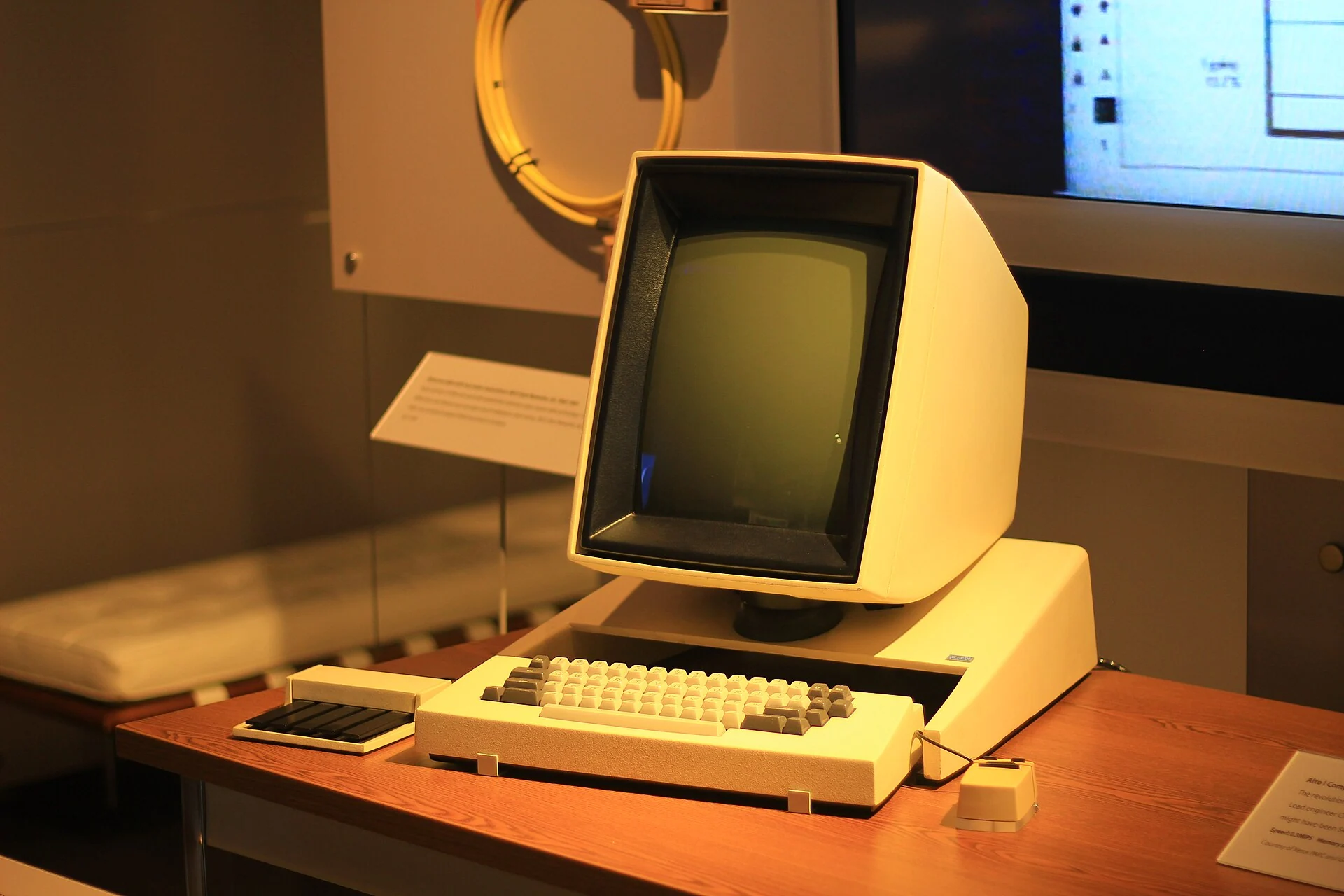
Xerox Alto, 1973 — display, mouse and chorded keyset. Photograph: Michael Hicks, CC BY 2.0.
01
The line
The line
The Alto arrived at PARC in 1973 with a display, a mouse and a chorded keyset, built largely by people from that room. In 1984 the graphical personal computer reached the public; the mouse came with it and the keyset did not. In 1991 the web gave linking a global address, twenty-three years after San Francisco.
Engelbart's own lab lost its funding. He spent his career arguing that the industry took the easy half and left the rest — the training, the chords, the collective work — behind.
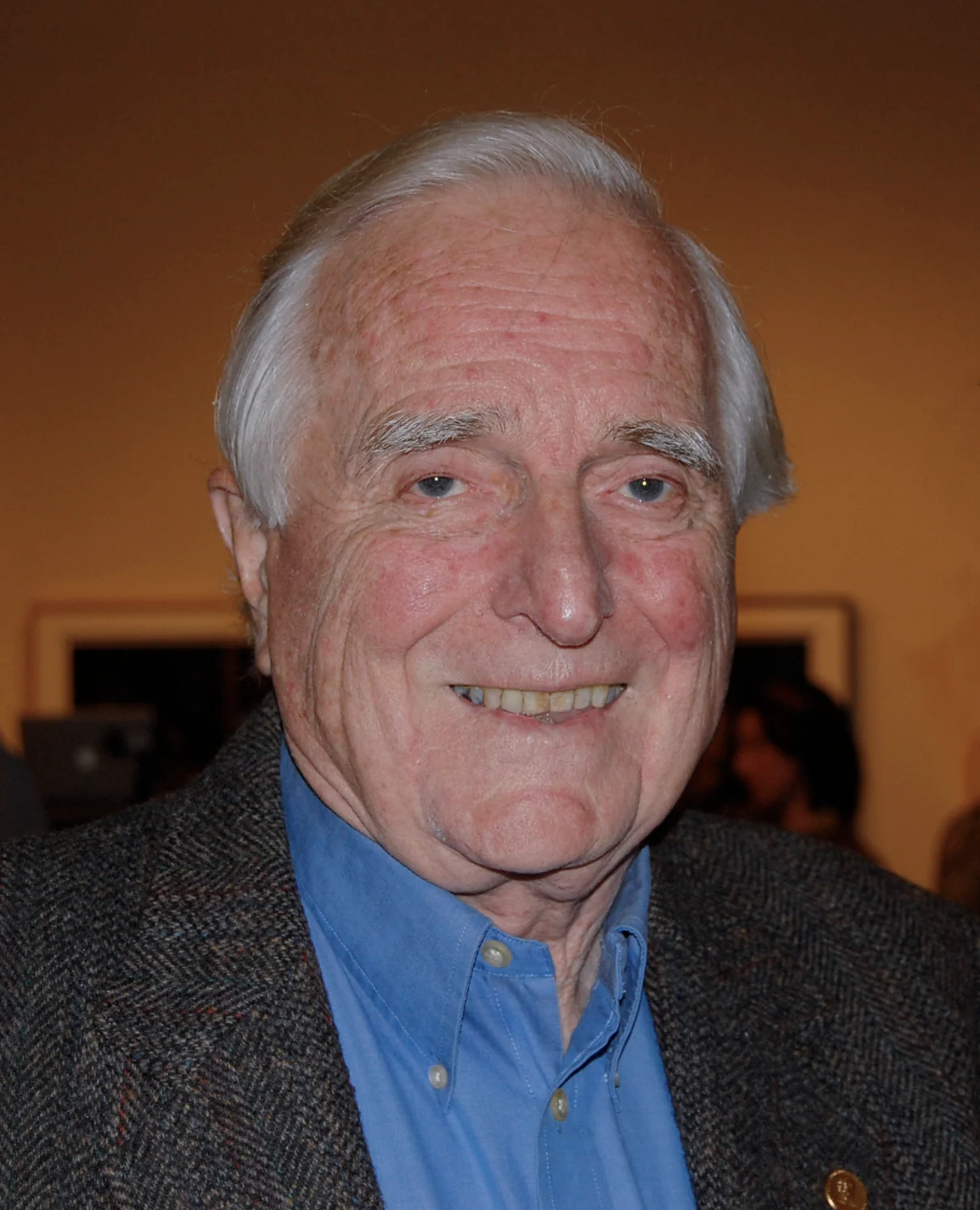
Douglas Engelbart in 2008, forty years on. Photograph: Alex Handy, CC BY-SA 2.0.
02
Still open
What is still open
Shared documents, live cursors and video in the corner of the same window have been rebuilt so many times they are invisible. The other half — deliberately raising what a trained group can think about together — is still open work.
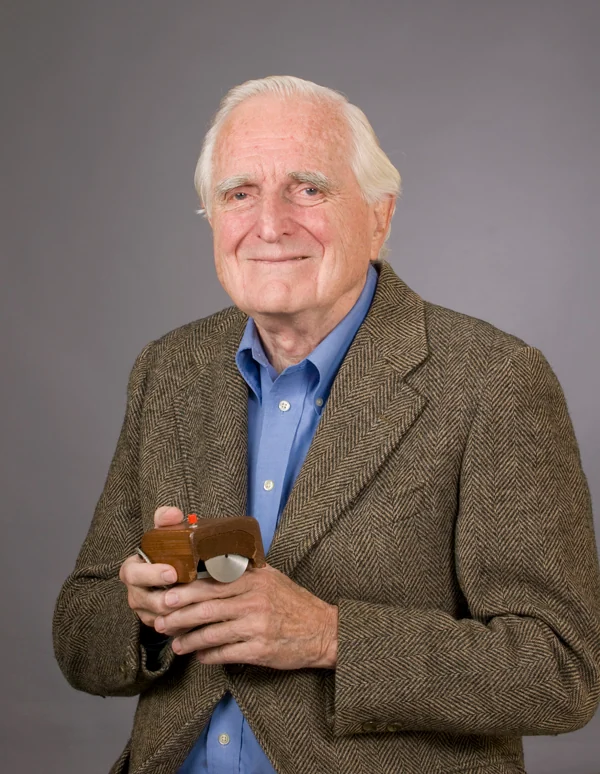
Engelbart with the prototype, later in life. Photograph: SRI International, CC BY-SA 3.0.
Start with the film
Ninety minutes, 1968, and still the best place to begin.
The future
was shared.